The Usual Patches, and Where They Stop
Rerankers, rewriting, HyDE, loops and agents all help, which is why they are everywhere. Here is what each one costs, where each one stops on multi-hop, and the gap that remains, measured.
4 min read
Blog
Engineering notes on navigation, ingestion, agent memory and honest benchmarking, written by the people who ran the experiments.
Rerankers, rewriting, HyDE, loops and agents all help, which is why they are everywhere. Here is what each one costs, where each one stops on multi-hop, and the gap that remains, measured.
4 min read
Title, sixty-token summary, tags, aliases: why the passport is where MonkeyLLM spends its intelligence, and how field-weighted BM25 turns curation into recall@5 = 1.00 at 1.3 ms.
4 min read
Corpus, question sets and harness are committed, and every table regenerates with one command. When the headline is 0/11 versus 11/11 for the same model, the only honest answer to suspicion is a rerun.
4 min read
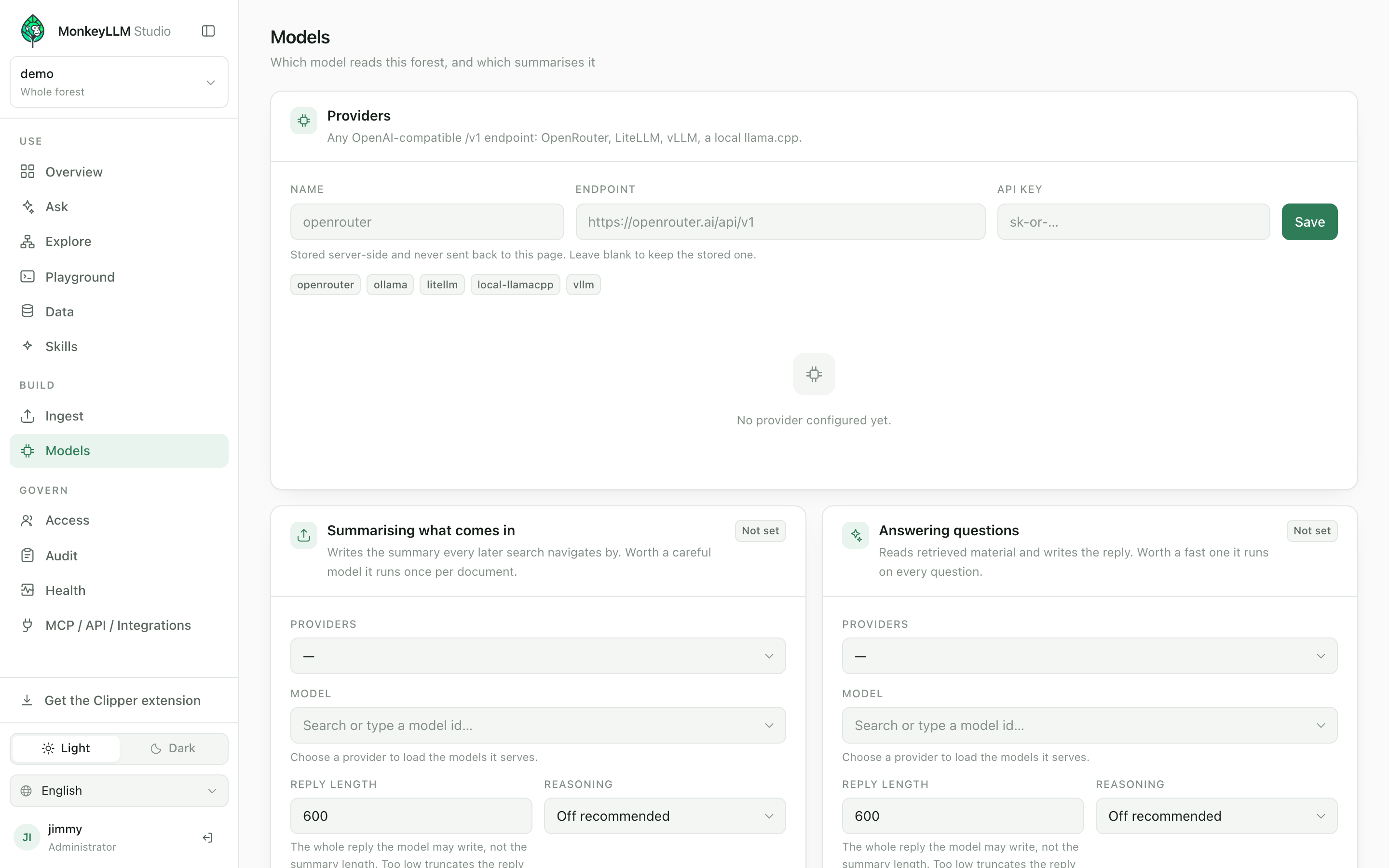
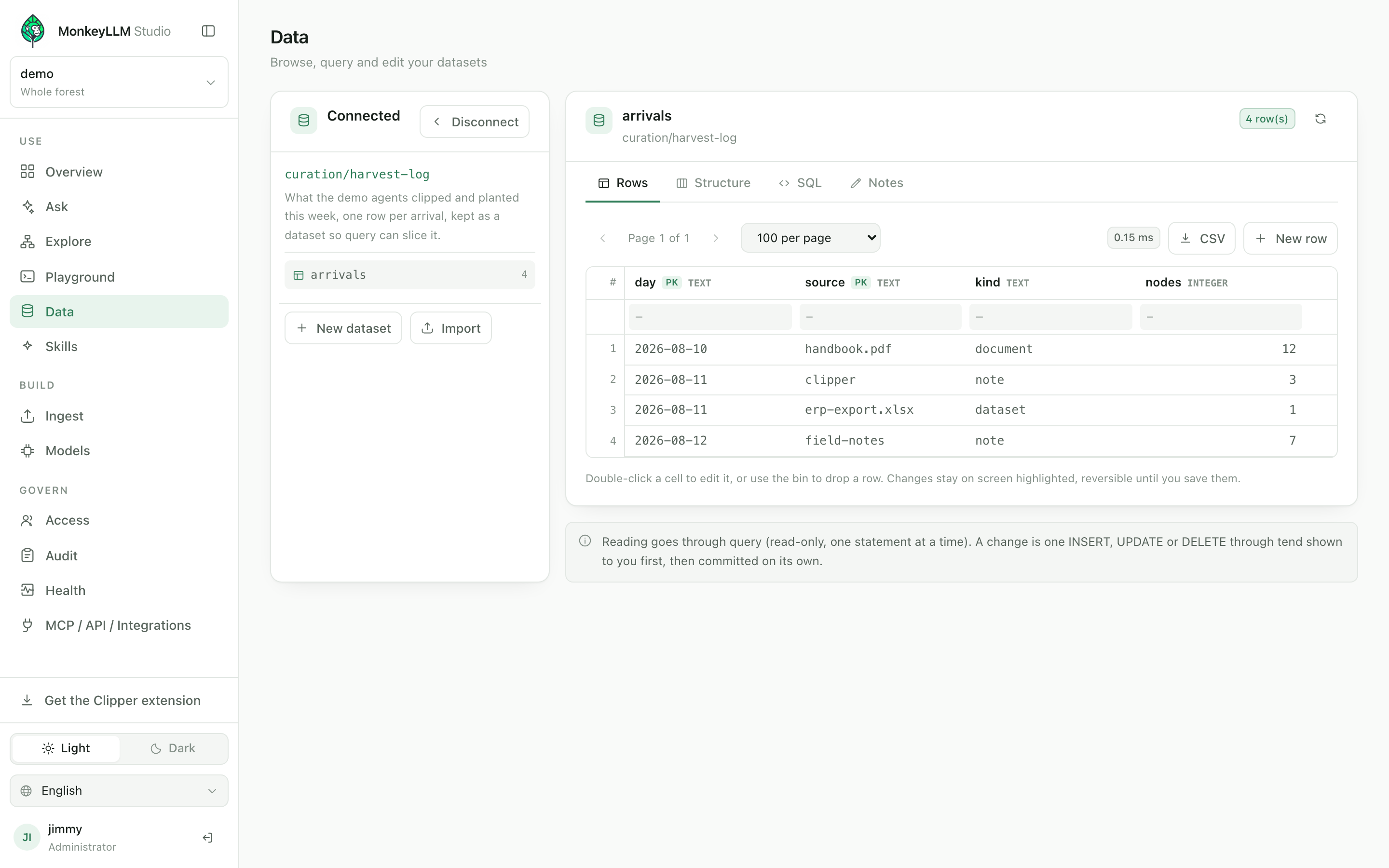
The benchmark rig is one RTX 3060, but nothing requires you to own a GPU. Point the chat binding at any OpenAI-compatible endpoint and let the forest do the structural work.
4 min read
Per-query cost makes failure look like a discount. Measured per correct answer, the forest navigator spends 0.58x the tokens of an iterative-RAG baseline, same 12B model. Here is the arithmetic.
4 min read
The category assumes an embedding service, an ANN index and a GPU. We measured entry search at recall@5 = 1.00 at 1.3 ms p95 with BM25 over SQLite, and kept the embedder optional.
4 min read
Every agent session starts by rebuilding context the last one already paid for. What a persistent, growable forest memory changes about agent workflows, and the skills file that makes agents actually use it.
4 min read
Trail learning missed its convergence criterion: hops fell by roughly half the threshold. The post-mortem: why sharp entry search and disciplined curation left trails almost nothing to compress.
4 min read
Four commands to deploy, one screen to claim it, one folder to ingest, and a first answer that arrives standing on the exact nodes it read. Your first ten minutes with a knowledge forest.
4 min read
The paper carries the full architecture, the benchmark tables and the findings that failed their criteria.